
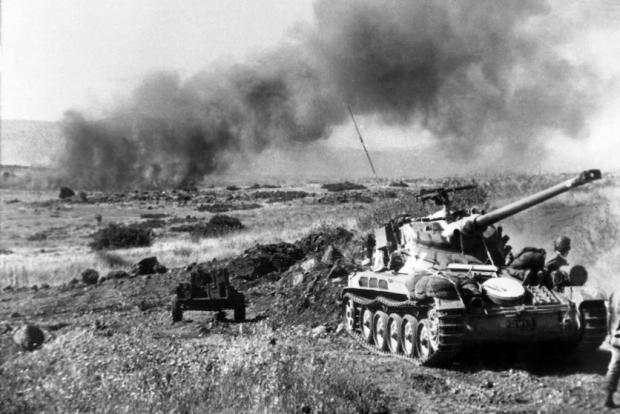
(above: Israeli tanks cross into the Golan Heights during the 1967 War)
As we have been talking about the Arab-Israel conflict in class, the assertion has been made that the conflict has changed to be one between Palestine and Israel. This is true, and the change in the conflict can be traced to the Camp David agreement of 1978. Because of Egypt’s willingness to negotiate and accept Israeli terms, Egypt was ostracized by Arab organizations (like the PLO) who remained dedicated to reclaiming Palestinian land. The fracturing of the Arab world over the issue of Palestine continues to this day as the Gulf Monarchies have come to recognize and trade with Israel.
However, one Arab nation still does not recognize Israel: Syria. A country with a hostile relation to Israel for all of its history, Syria has been left out of contemporary conversations about the future of Arab-Israeli relations. This is largely due to the continuing civil war in the country since 2011. While a lot has changed in a decade, Israel continues to occupy the Golan Heights.
A strategic position with a domineering view of South-Western Syria, this land was taken in the 1967 War by Israel to secure their northern flank from future Syrian attacks. This position was almost overrun in the 1973 Yom Kippur War, but the Israelis managed to hold it. While major Arab players like Egypt and Jordan have settled with Israel, none of them still have territory annexed by Israel.
As the civil war in Syria comes to its final phases with the Assad government maintaining its hold on power, it remains to be seen what comes next. Up until 1998, Syria had conducted hostile operations against Israel via Lebanon but had never made direct moves against Israel. This is likely because of a lack of Egyptian support should armed conflict come to pass. But as the United States re-evaluates its global alliances and begins the long process of de-entanglement, the Golan Heights must be treated as a potential hot spot for future conflict.
It is unlikely that the Assad government, or any Syrian government, would come to recognize Israel. The difference between Syria and the Gulf monarchies is that Syria does not have any pre-existing economic ties that it could develop by recognizing Israel. And should American military and economic aid to Egypt cease, or American support to Israel be questioned, Israel could very well see itself set against its Arab neighbors in armed struggle. But should Golan remain in the hands of Israel, Syria will be sure to continue hostilities.
(inspiration for article: https://www.jstor.org/stable/2538209?seq=1#metadata_info_tab_contents)
